
Testing Saliva Growth Factors
In Support of Stem Cell Therapeutics
Please Click on this Front Page to read the paper:
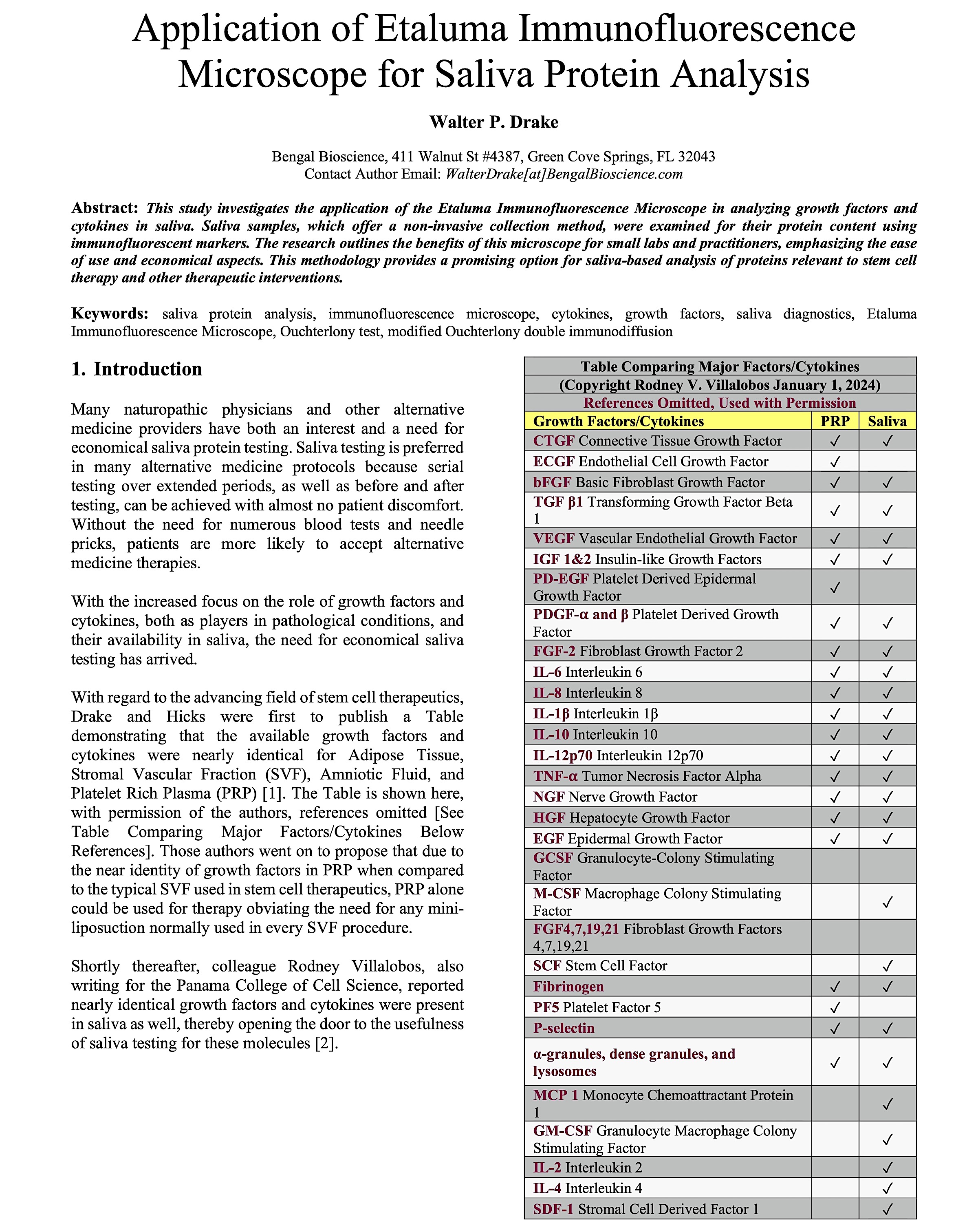
Objective Testing of Changes in Growth Factors and Cytokines Before and After a Stem Cell Therapeutic, As Well As For Any Condition.
Background: We start with the early observation that growth factors play a major role in stimulating stem cells to grow and multiply. The idea is that a patient’s dormant stem cells can be caused to be excited and active by growth factor stimulation. It has already been shown that injecting high dose Platelet Rich Plasma (PRP) which has been light activated to release growth factors prior to re-injection into a patient has shown a curative effect
It was shown as early as 2010, that endothelial cells, when co-cultured with stem cells, cause major increases in stem cell proliferation due to the the release of growth factors and cytokines (1). And the Paired Mice experiments of 2005-2015 clearly demonstrated that serum factors (i.e. circulating serum growth factors and cytokines) and not stem cells themselves were the therapeutic agent in repairing an old mouse damages muscle.
And so, growth factors began to take center stage as the use of the SVF for stem cell therapy became the go-to modality. SVF (stromal vascular fraction) was shown to contain not only many kinds of growth factors, but also a variety of non-stem cells that also excreted various growth factors and cytokines in connection with therapy. This association was presumed,, because there was no testing to actually demonstrate any changes in the patient, other than that the therapies were working.
Identification of Growth Factors: In 2023, my colleague, Laurence Hicks, Sr. and I were amazed to report on the similarity of about 20 growth factors associated with the principle sources of stem cell therapeutics: Adipose tissue, SVF Cell Free Fraction, PRP, and Amniotic Fluid. This led us to propose that “stem cell therapy” could be undertaken with activated growth factors and cytokines alone, without the need for the actual transfer of stem cells. See Discussion and Table of Growth Factors Here: https://panamacollegeofcellscience.org/2023/07/01/2023-high-dose-light-activated-prp-the-new-stem-cell-therapy/
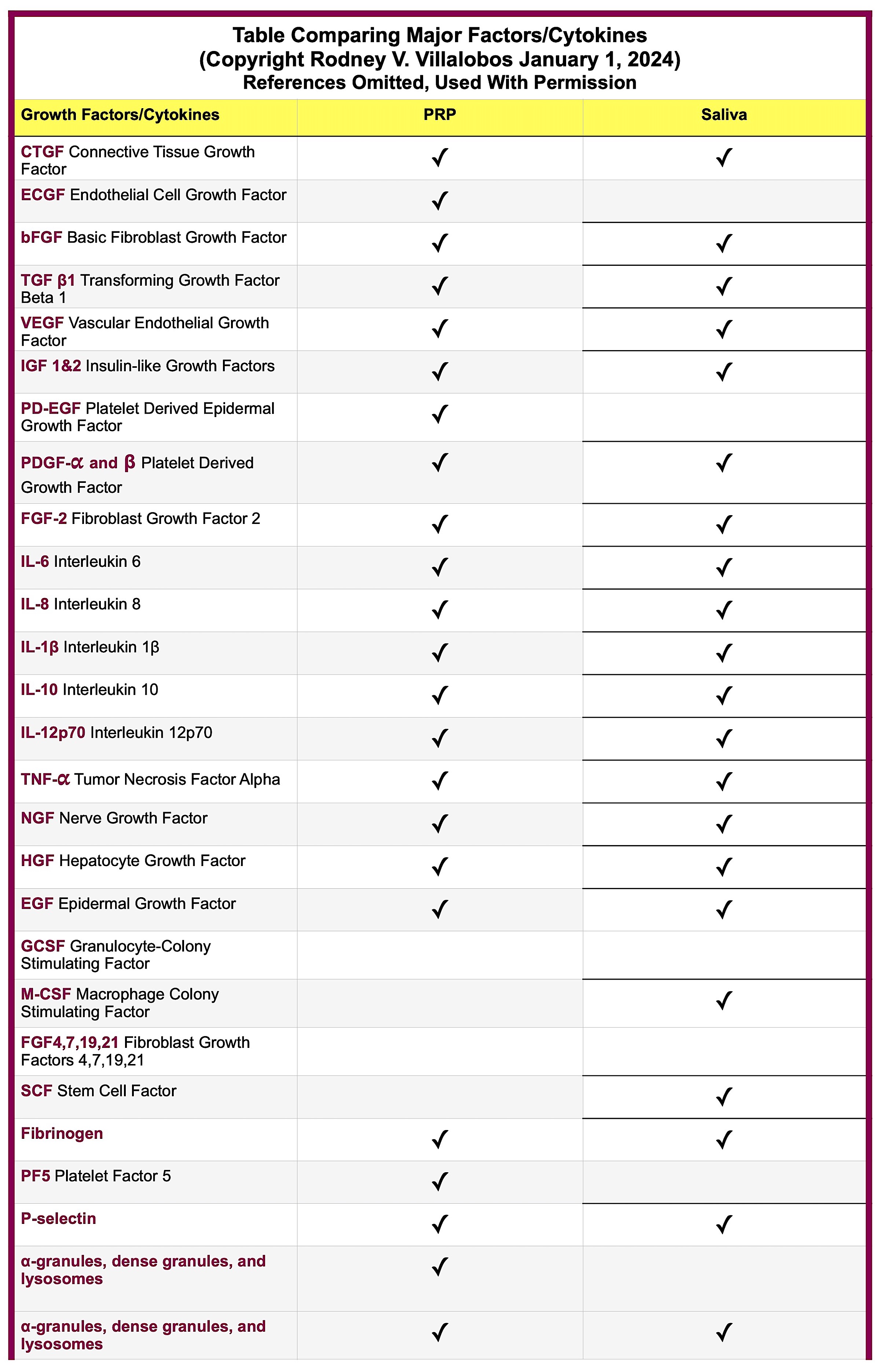
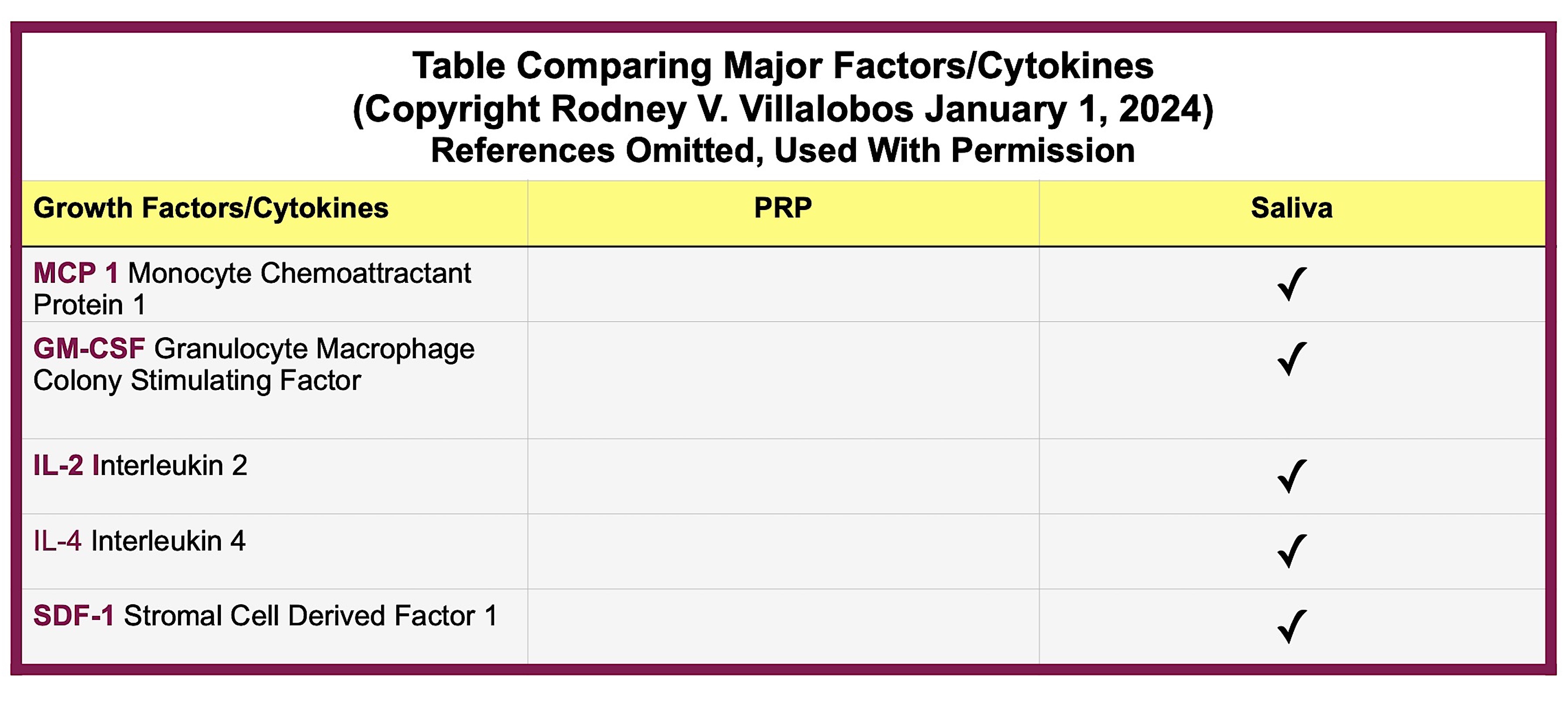
The Saliva Growth Factor Table: In 2024, colleague Rodney Villalobos set us up by creating a Table showing that saliva growth factors and cytokines in saliva were comparable in identity to the usual stem cell sources, particularly PRP, which therapeutic is transforming stem cell therapy. Although observed in small quantities in saliva compared to other saliva proteins, various other researchers have shown that for some growth factors such as VEGF, the concentration in saliva is similar to that of serum! The Villalobos Table is here:
About Our Testing
The Procedure: Saliva Collection and Preliminary Processing. Saliva is collected by the patient or health care provider/clinical scientist via the Bengal Bioscience home test kit. The passive procedure is used wherein 3-5 ml of passive drool is collected into a test tube for sending to our lab. Saliva testing is now commonplace, with labs such as ZRT using saliva test kits to measure hormones. The saliva kit is received at our lab, and the saliva sample is centrifuged to remove any particulate matter or gel, and made ready for testing.
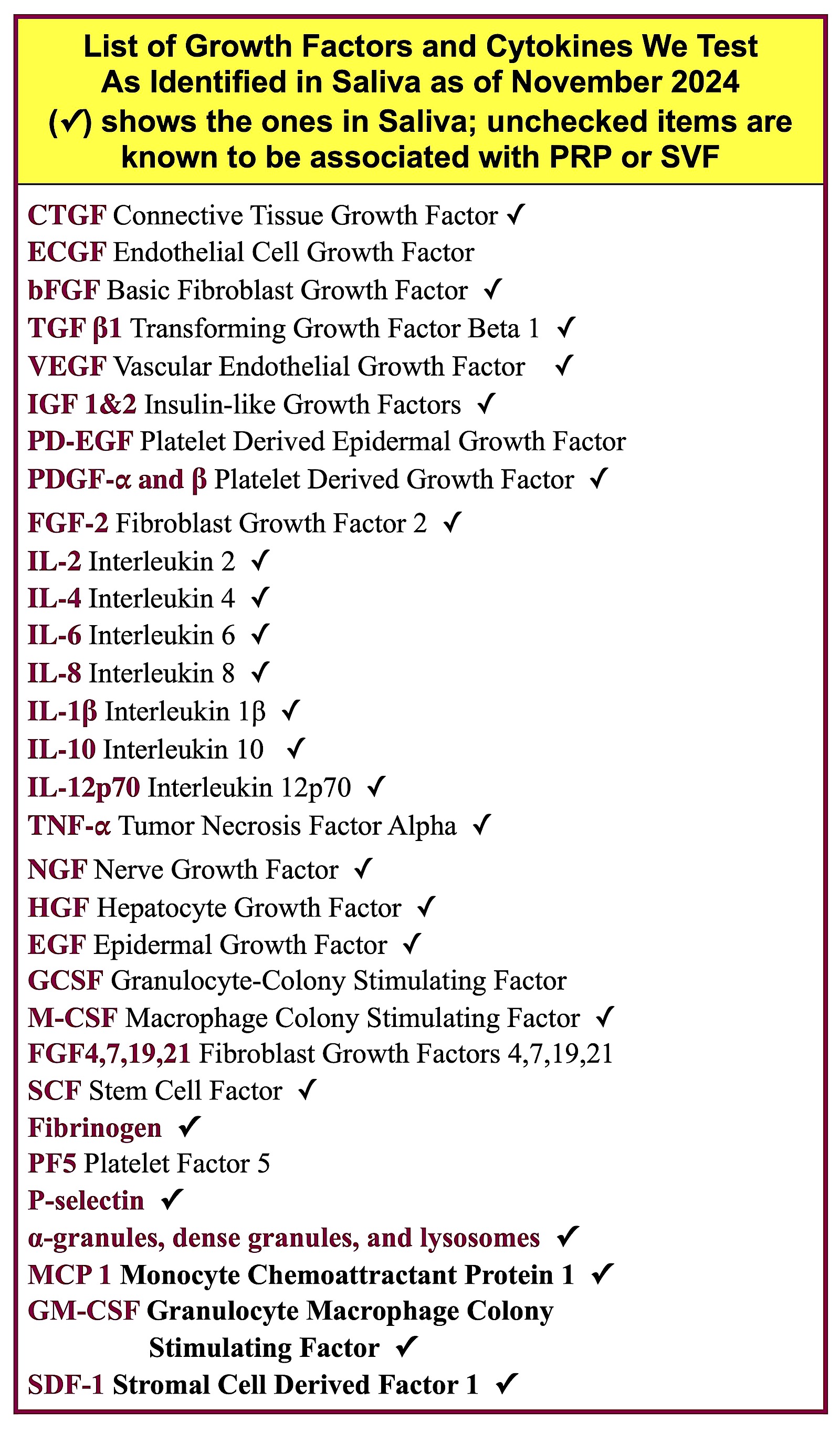
Our Methodology. Samples are then challenged with antibody to various growth factors and cytokines using the Ouchterlony double-diffusion assay, which is an immunochemistry test. By making use of immunofluorescent antibodies, quantification is achieved by measuring the fluorescence emitted by any reactive bands using an immunofluorescent microscope. Comparison of intensities are thereby achieved objectively and without technician variability. This is our list of tests:
Our Published Paper
Our Methodology is Published Here: Drake, WP, “Application of Etaluma Immunofluorescence Microscope for Saliva Protein Analysis”
International Journal of Science and Research (IJSR), 13(11): 86-93 (2024)
EtalumaPaperIJSRNov2024
